Giving access to affordable AI-powered assistive technology for DeafBlind students.
Braillify is the affordable, offline device giving the DeafBlind community the power to hear speech, speak back through typing, and read printed media in Braille.
Our vision
"Connection, engagement, and autonomy for DeafBlind students."
Inventing to
empower
The Challenge: Connection, engagement, and autonomy for DeafBlind students
The world for the DeafBlind is often artificially constrained by a lack of accessible tools, leaving education entirely dependent on the rare availability of tactile interpreters.
Our Mission
We refuse to let technology leave this community behind. Driven by a call to invent on behalf of DeafBlind individuals, our team built Braillify—a breakthrough ecosystem powered by three custom, lightweight AI models. Operating entirely offline on affordable hardware, Braillify dismantles the barriers to education and autonomy through three core innovations:
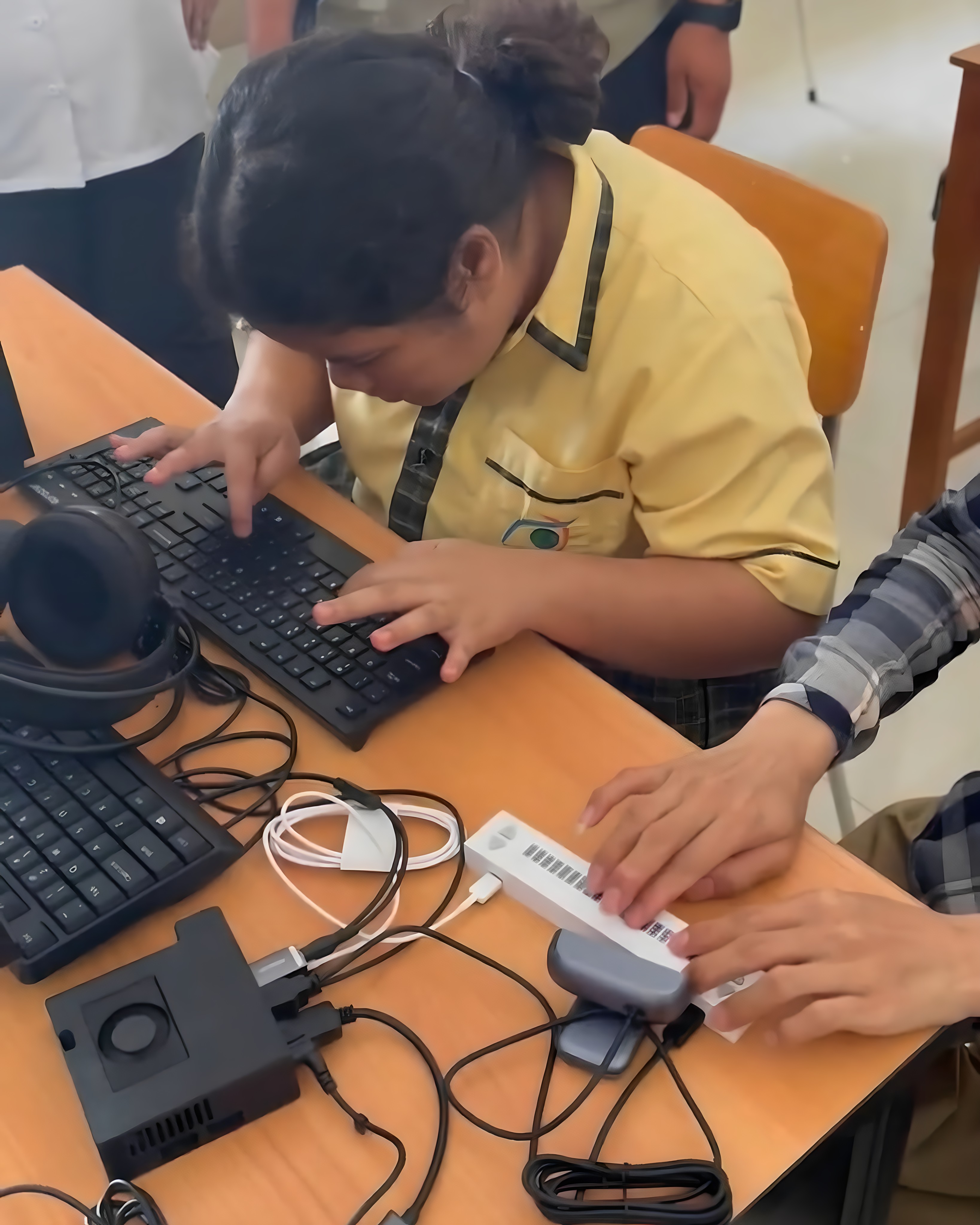
- Real-Time Translation: Instantly converts a teacher’s spoken lessons into physical Braille.
- Two-Way Voice: Allows students to type on QWERTY or Perkins keyboards, instantly generating spoken speech to communicate back.
- Braille Literacy: Empowers students to independently scan and read books, magazines, and printed materials.
The First Milestone: Helen Keller Indonesia
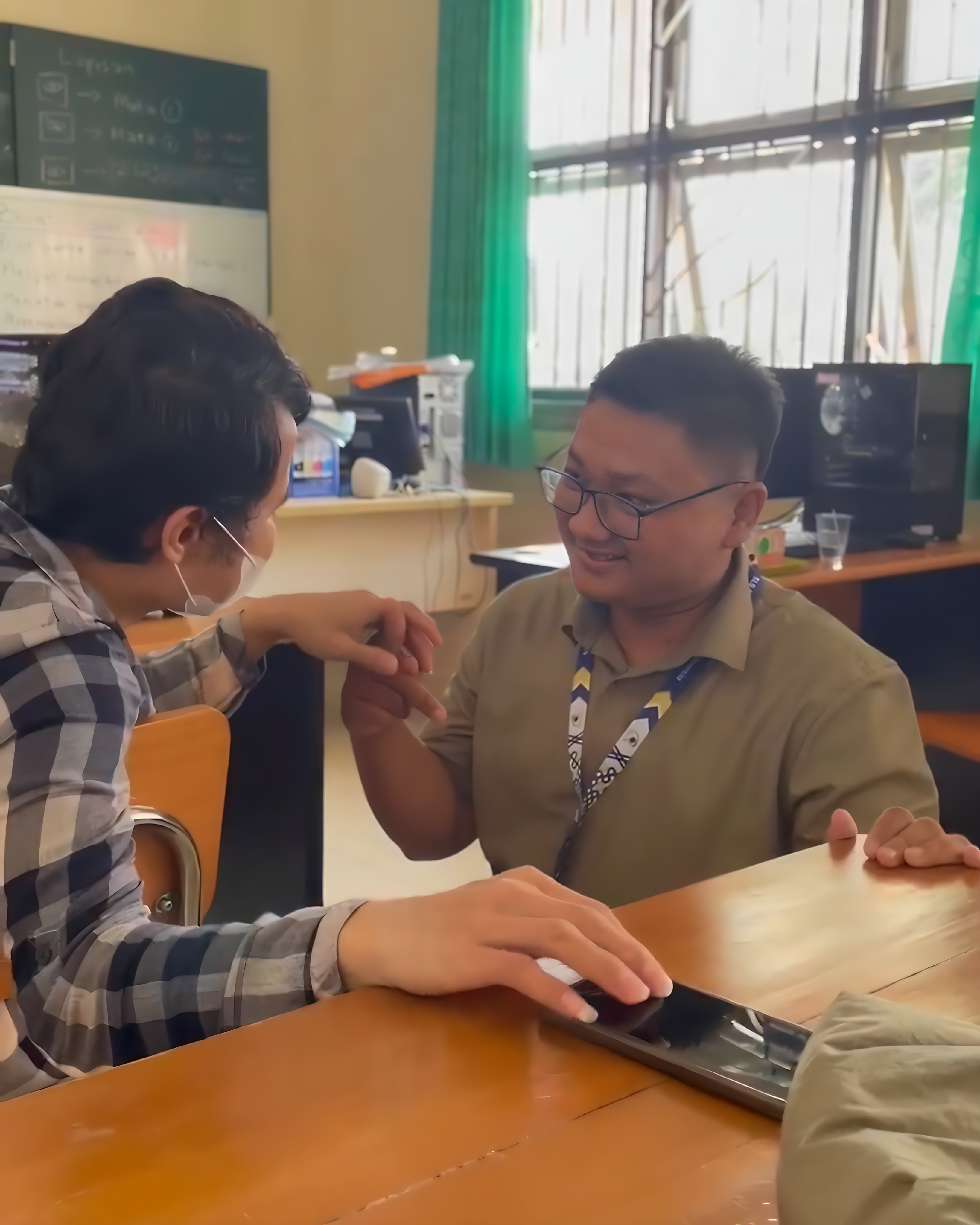
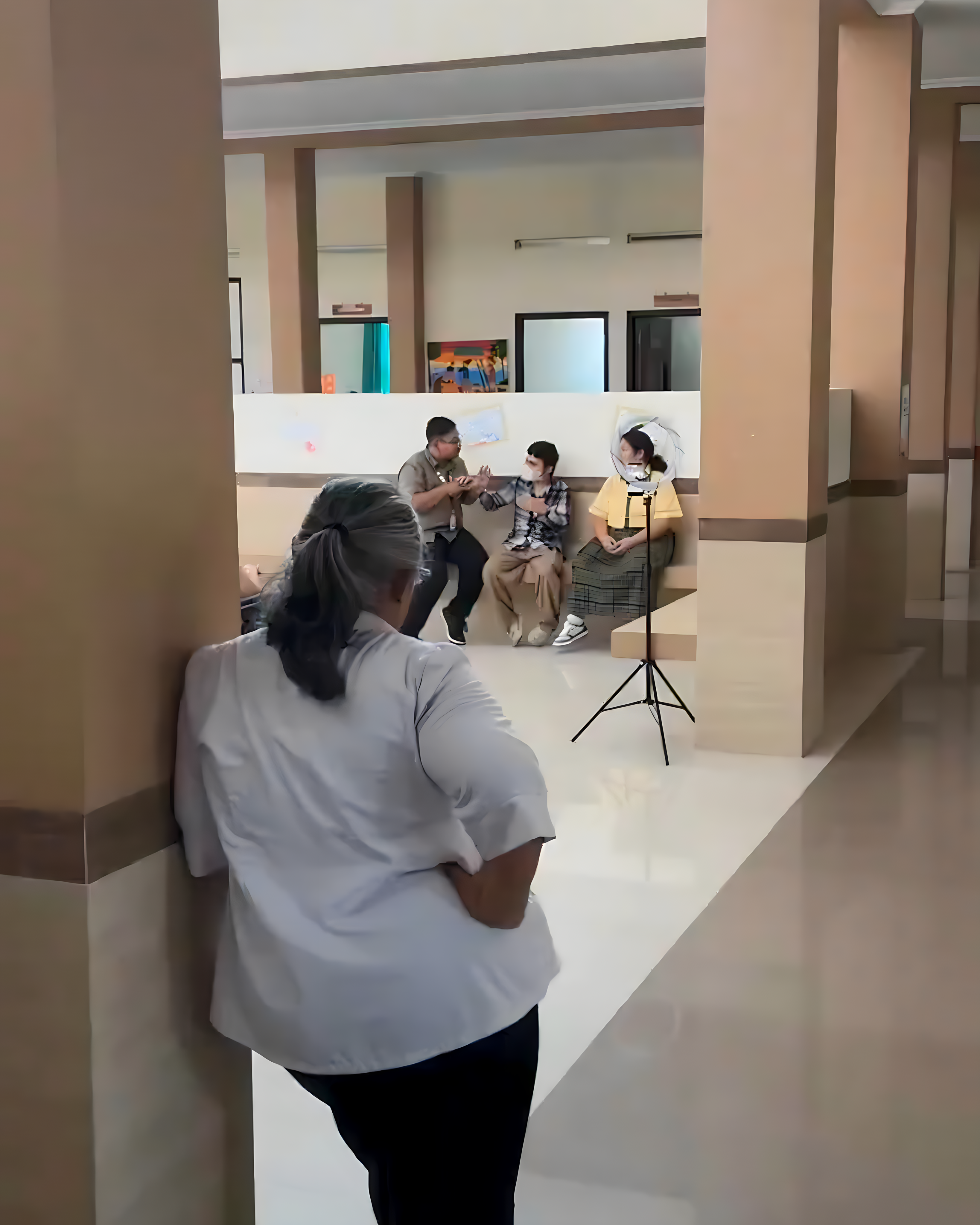
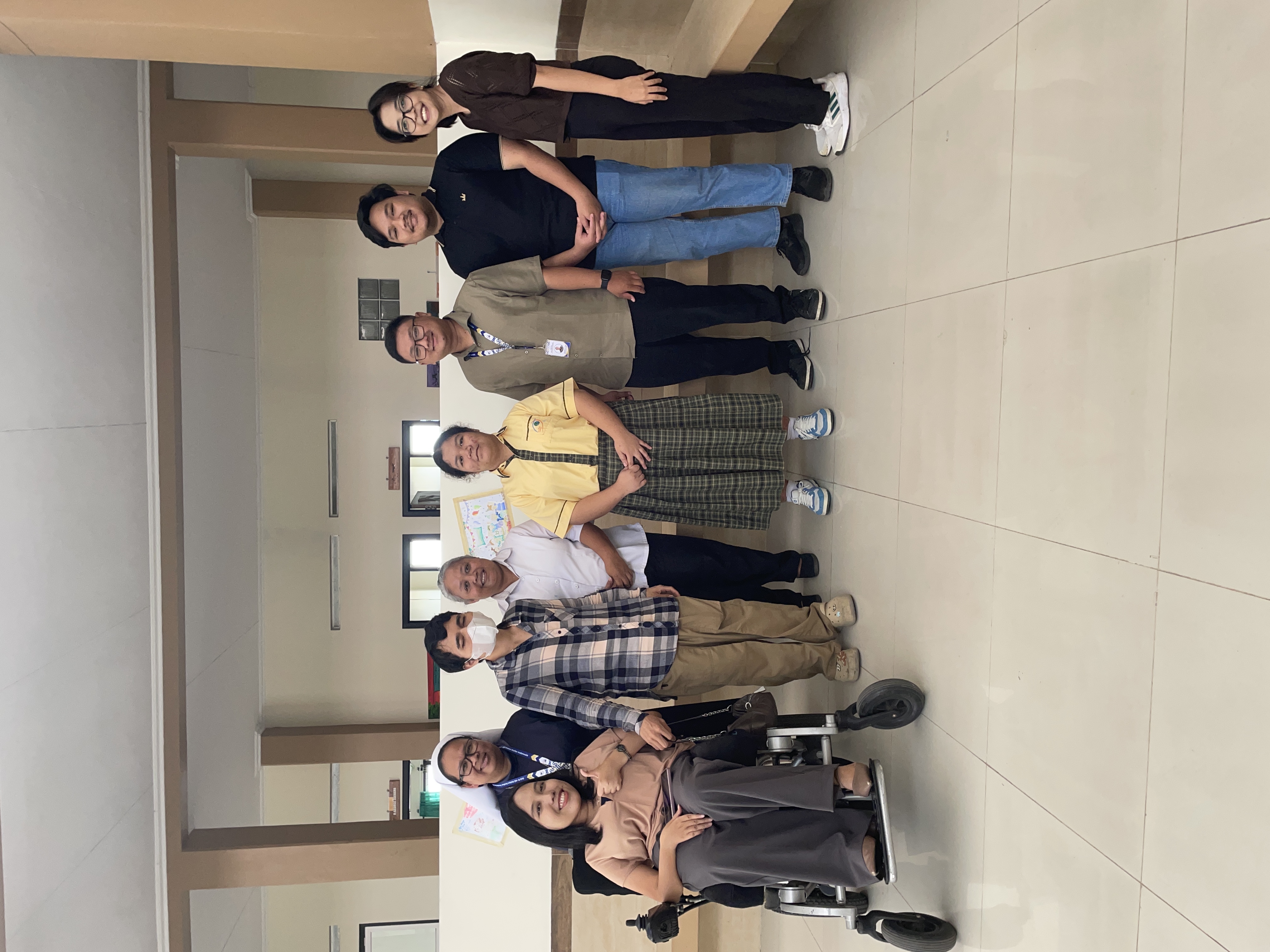
Innovation requires a proving ground. We are currently partnering with Helen Keller Indonesia in Yogyakarta to deploy Braillify where it is needed most. Your support directly funds the manufacturing and deployment of these devices, proving that affordable, AI-driven independence is not a distant dream—it is a reality we can deliver to every student today.

-
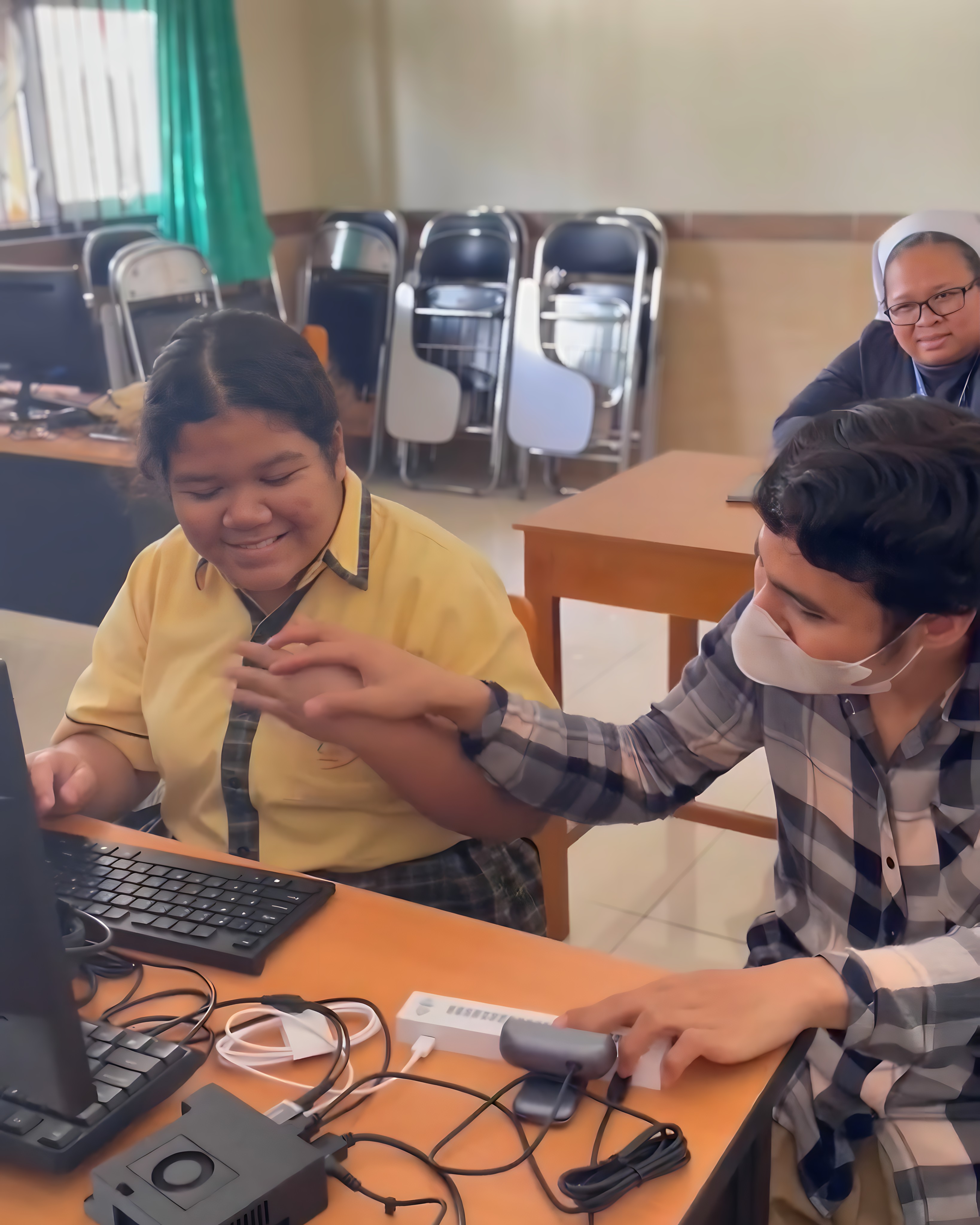
"It is so easy to use! When can I buy one? Please keep it affordable." — Handaka, DeafBlind Youth
Let's build
this together
AI4DeafBlind is made of volunteers that use open-sourced AI, which means that every dollar you donate is maximized to help provide the hardware needed to give a DeafBlind student access to Braillify.
Our fundraising goal
Digital Braille Library for DeafBlind Students at Helen Keller Indonesia
Help us reach $10K to deploy 5 Braillify units at Helen Keller Indonesia — giving DeafBlind students the hardware they need for speech-to-Braille, typing-to-speech, and Braille literacy.
In order to build a complete system, Braillify — which consists of a scanner, NVIDIA Jetson Nano, and Braille Display Orbit 20 — we would need to raise USD $1,600 per unit. The goal is 1 Braillify per DeafBlind student.
Give TodayWant to get involved? Let’s get in touch
Thank you to our partners
Braillify exists because of the organizations that lend expertise, hardware, and field access — from classrooms in Yogyakarta to labs across the Pacific Northwest.




Board of Advisors
Our advisors bring deep experience across technology, finance, marketing, and accessibility — guiding Braillify from research through real-world deployment.